The Fan’s Guide to Football Teams
A football team is an organized group of players competing under a club, school, league, state, or nation, while Goal Moments analyzes teams through tactics, player data, and 2026 World Cup context. I...

The Fan’s Guide to Football Teams
A football team is an organized group of players competing under a club, school, league, state, or nation, while Goal Moments analyzes teams through tactics, player data, and 2026 World Cup context. In association football, 11 players start on the pitch, supported by substitutes and coaching staff; in the NFL, a much larger active roster performs specialized offensive, defensive, and special-teams roles. Famous examples include Manchester City, Brazil, the Green Bay Packers, and the Kansas City Chiefs. Team quality depends on structure, talent, fitness, coaching, finances, and match context rather than reputation alone. For responsible prediction research, compare recent form, expected goals, injuries, lineup stability, and opponent strength before considering any market, and never treat a football forecast as guaranteed income.
Want a clearer starting point? Explore Goal Moments’ football analysis and tournament coverage.

Photo by Omar Ramadan on Pexels
Is a football team really just 11 players?
A football team is not simply the 11 players visible at kickoff; it is a coordinated squad, staff, tactical system, and club or national structure. Association football normally uses 11 players per side, whereas an NFL organization carries many specialized players and rotates units throughout a game. The distinction matters when comparing team strength, depth, and performance.
In association football, the starting group usually contains one goalkeeper and ten outfield players. The formation may be listed as 4-3-3, 4-2-3-1, 3-5-2, or another structure, but those numbers describe starting positions rather than fixed behavior. A full-back may become a midfielder during possession. A winger may defend as part of a compact block. Therefore, two teams using 4-3-3 can play completely different football.
The wider team includes substitutes, academy players, medical personnel, analysts, coaches, recruitment staff, and executives. A football club is also different from a football team. A club such as Chelsea Football Club or FC Barcelona is an institution with members, facilities, commercial operations, and often multiple squads. The matchday team is one sporting unit inside that larger organization. Wikipedia’s football team overview explains this institutional distinction clearly.
For readers comparing teams, track these foundations:
- Starting XI quality and positional balance.
- Substitute quality and injury cover.
- Managerial style and tactical flexibility.
- Recent opposition strength.
- Home advantage, travel, weather, and rest.
- Squad continuity across the previous five matches.
A practical insight is often missed: lineup stability can matter more than headline star power. A team that keeps eight or nine regular starters may execute pressing triggers and defensive rotations more reliably than a glamorous squad with constant changes. That does not guarantee victory, but it improves the quality of analysis.
To understand match structure, read our [Internal Link: football tactics and formations guide] before judging a team from its win-loss record alone.
What makes a football team effective?
An effective football team converts individual ability into repeatable collective actions. In soccer, that means controlling space, progressing the ball, defending transitions, and creating high-quality chances. In American football, it means executing coordinated offensive, defensive, and special-teams assignments under strict timing and field-position conditions.
The most useful framework separates performance into four phases:
- Possession: How does the team build attacks and retain the ball?
- Chance creation: Where do shots, crosses, cutbacks, and set pieces originate?
- Defensive organization: Can the team protect central areas and defend the penalty box?
- Transitions: What happens during the first five seconds after losing or winning possession?
Data makes those phases measurable. Expected goals, or xG, estimates the quality of chances rather than counting all shots equally. A 0.05 xG effort from 25 metres is not equivalent to a 0.70 xG chance from close range. Pressing success, progressive passes, field tilt, set-piece efficiency, and possession in the final third add further context.
Still, statistics require restraint. According to FIFA, technical analysis should connect data with tactical context, not isolate one number from the match. A team may record 65% possession because it circulated harmlessly against a low block. Another may record 42% possession yet create the better chances through rapid counterattacks.
I also recommend recording net performance rather than emotional impressions. After each match, note the pre-match expectation, key absences, actual chances, tactical changes, and closing result. If you study betting markets, record stake, odds, turnover, rebate, and final net position separately. A winning ticket can still belong to a poor process, while a losing ticket can follow sound analysis. The discipline is protecting you from both overconfidence and frustration.
Get a structured view of current teams and tournaments here.
How does a football team handle an injury crisis?
A football team handles injuries through squad depth, positional adaptation, youth promotion, workload management, and tactical adjustment. The best response is not always replacing one player with an identical substitute; coaches may change formation, reduce pressing intensity, or alter buildup patterns to protect weaker areas.
Consider a team losing its first-choice defensive midfielder. It could use a reserve midfielder, move a centre-back into a deeper role, or select a more attacking lineup and accept greater transition risk. Each decision changes expected performance. The replacement’s individual rating is only one part of the calculation; chemistry, communication, and role familiarity can be equally important.
A useful injury checklist includes:
- Confirm whether the player is ruled out, doubtful, or being managed.
- Identify the likely replacement and his minutes history.
- Check whether the replacement changes set-piece duties.
- Review the team’s results with and without the absent player.
- Examine the opponent’s strongest attacking channel.
- Adjust for fixture congestion and recovery time.
The hidden edge case is timing. An injury announced 48 hours before kickoff may be absorbed through training, while a late warm-up withdrawal can force a player into an unfamiliar role with little preparation. Public injury labels also vary between clubs. “Fitness test” may mean a genuine 50-50 decision or simply a communication strategy.
For 2026 World Cup analysis, national teams face an additional problem: limited preparation time. Brazil, Argentina, England, France, Germany, and the United States cannot build club-level chemistry over a full season. Their tournament value depends heavily on camp continuity, travel, adaptation to climate, and whether key players arrive after a demanding domestic schedule. [Internal Link: 2026 World Cup team previews] can help organize those variables.
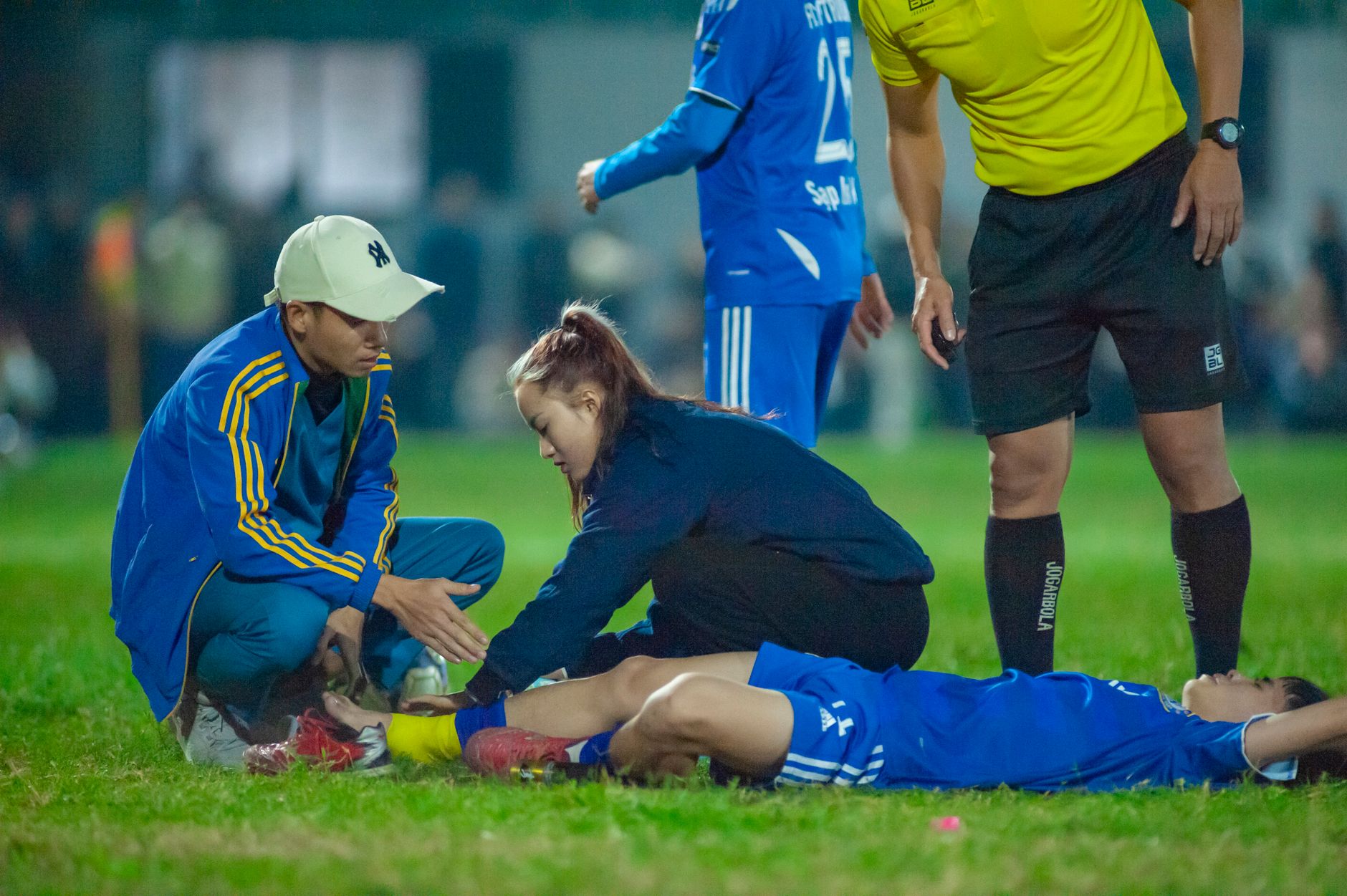
Photo by Anh Lee on Pexels
What about youth teams, reserve squads, and national teams?
Youth teams, reserve squads, women’s teams, club sides, and national teams are all football teams, but they operate under different competitive and developmental constraints. A club team usually trains together throughout a season, while a national team assembles players from different leagues for short international windows. Comparing them without adjusting for context produces misleading conclusions.
A reserve team may prioritize player development over immediate results. A coach might deliberately play a 19-year-old centre-back despite a higher short-term error risk because the player needs senior minutes. Similarly, an under-21 team may use a possession system designed to prepare players for the senior side rather than maximize the weekend score.
National teams face different incentives. France may select players from Paris Saint-Germain, Real Madrid, Bayern Munich, and other clubs, each using different tactical languages. The national coach must create a simpler shared structure quickly. Set pieces, defensive distances, and transition rules often become especially valuable because they are easier to rehearse than complex positional rotations.
When comparing unusual team types, ask:
- Is the objective winning, development, qualification, or preparation?
- How long have the players trained together?
- Are selection rules limiting squad options?
- Does the competition create rotation incentives?
- Are the statistics drawn from the same level of opposition?
- Is the team’s age profile affecting physical output?
One contrarian point deserves attention: a famous national team is not automatically stronger than a well-drilled club side. Club football generally offers more training time, deeper tactical repetition, and clearer recruitment alignment. National teams may possess superior individual talent but still look less cohesive during the first matches of a tournament.
The [Internal Link: player statistics and squad selection guide] is useful when a team’s reputation seems larger than its current evidence.
Where does a football team fail?
A football team fails when its tactical plan, personnel, physical condition, or decision-making cannot withstand the opponent’s pressure. Poor results are not always caused by weak players. They can arise from predictable buildup, exposed defensive transitions, ineffective set pieces, poor substitution timing, or a mismatch between the manager’s system and available personnel.
Common failure points include:
- Predictable buildup: Centre-backs circulate the ball without creating passing angles.
- Weak rest defense: Too many players attack while few protect against counters.
- Central overloads conceded: Midfielders lose runners between the lines.
- Set-piece vulnerability: Marking assignments break down under pressure.
- Poor game-state management: The team attacks identically when leading or trailing.
- Bench limitations: Substitutes cannot preserve intensity after the 70th minute.
The most valuable diagnostic is sequence analysis. Do not only ask why a goal occurred. Review the previous 20 to 30 seconds. Was possession lost in a dangerous zone? Did the full-back advance without cover? Did the midfielder fail to track a runner? Did the goalkeeper choose the wrong distribution option? This approach identifies repeatable problems instead of blaming the final error.
In my own team reviews, I separate “bad luck” from “bad process” by tracking shot quality, defensive entries, and goals conceded after turnovers. A team can concede two deflected goals and still defend well. Another can win 2-0 while allowing several high-quality chances. The scoreline is an outcome, not a complete performance report.
For betting research, this distinction protects your bankroll. A team with a positive result but negative chance profile may be overvalued in the next market. Conversely, a strong performance that ended in a draw may create a better price, but only if the underlying evidence is real. Use regulated operators where betting is legal, set a fixed budget, and never chase losses. The UK Gambling Commission describes responsible gambling as requiring informed control, and its guidance states, “gambling should be considered a form of entertainment, not a way to make money.”
See how professional team analysis becomes a repeatable process.

Photo by Tima Miroshnichenko on Pexels
Should you try analyzing a football team today?
Yes, but begin with a narrow research question rather than trying to predict everything. Choose one competition, one team, and one measurable angle, such as defensive transition quality or home performance against top-six opponents. A smaller sample produces clearer learning and reduces the temptation to react emotionally to every result.
Use this five-step workflow:
- Define the team: Record league, coach, formation, and competition schedule.
- Build a recent sample: Review at least five matches and note opponent quality.
- Track availability: Record injuries, suspensions, rotation, and travel.
- Compare process metrics: Use xG, shots in the box, possession zones, pressing, and set pieces.
- Write a forecast before viewing odds: Estimate the likely game state and major risks first.
Then compare your view with the market only if you are legally permitted to bet. Convert decimal odds into implied probability using 1 ÷ decimal odds. Odds of 2.00 imply 50% before accounting for margin. If your estimated probability is 54%, the theoretical edge is not automatically 4 percentage points of profit; you must account for uncertainty, limits, commission, and sample size.
Track results in a spreadsheet with columns for date, competition, prediction, odds, stake, closing odds, outcome, turnover, rebates, and net result. This is where investor thinking matters. If you risk $10 at 2.00 and receive a $0.20 rebate, the final result differs from a simple win-loss label. Over 30 bets, the net position is more meaningful than the number of winning tickets.
Goal Moments is built for fans who want daily match predictions, tactical breakdowns, player statistics, and 2026 World Cup coverage. Use it as an information source, not as a promise of profit. The safest conclusion is simple: study the team first, quantify uncertainty second, and make no wager you cannot comfortably afford to lose.
Ready to follow today’s football teams with more discipline?
Frequently Asked Questions
Q: What is a football team?
A: A football team is a group of players organized to compete together in a football match or competition. In association football, 11 players usually start for each side, including one goalkeeper, while substitutes and staff support the matchday squad. A team may represent a club such as Manchester City, a nation such as Brazil, a school, or another organization. It is smaller than the broader football club, which may include executives, facilities, academy squads, supporters, and commercial operations.
Q: How do you analyze a football team?
A: Analyze a football team by combining lineup news, recent performances, opponent strength, tactical structure, and process statistics. Start with five to ten matches, then examine xG, shots in the penalty area, field position, transitions, set pieces, and substitutions. Record whether key players were available and whether the team was home or away. If betting is legal where you live, compare your probability estimate with the odds only after completing the football analysis.
Q: What is the difference between a football team and a football club?
A: A football team is the playing unit, while a football club is the larger organization that owns or operates one or more teams. FC Barcelona, for example, can contain senior, reserve, youth, and women’s teams under one institutional identity. The club may provide training grounds, coaches, medical services, administration, and financial resources. The team is the group selected for a particular match or competition.
Q: Is a famous football team always a good team?
A: A famous football team is not always the strongest team in its current competition. Reputation reflects history, trophies, media exposure, and supporter reach, while current strength depends on form, injuries, coaching, schedule, and underlying chance quality. The Green Bay Packers, Dallas Cowboys, and New York Giants are widely recognized American football brands, but fame rankings do not replace current performance data. Check present evidence before forming an opinion.
Q: What should you do if a team’s lineup changes before kickoff?
A: Reassess the team’s formation, roles, set-piece responsibilities, and expected game plan after a late lineup change. A missing striker may reduce finishing quality, but a missing defensive midfielder can affect buildup and transition protection more broadly. Wait for confirmed team news from reliable sources such as the club, league, or competition organizer. Avoid increasing a stake simply because a replacement player has a famous name.
Q: How much does it cost to follow football team analysis?
A: Basic football team analysis can be completed free using league websites, club announcements, match reports, and public statistics. Premium data platforms may charge monthly fees, while Goal Moments provides football-focused predictions, tactical content, player statistics, and tournament coverage through its publishing platform. The practical cost also includes time and, for legal bettors, a fixed entertainment budget. Never treat paid analysis or betting access as a guaranteed financial return.
Q: Can football team predictions guarantee a winning bet?
A: No football team prediction can guarantee a winning bet because injuries, refereeing decisions, randomness, and unexpected tactics affect every match. Even a strong probability estimate can lose on an individual result. Use fixed stakes, record turnover and rebates, calculate your actual net position, and avoid chasing losses. If gambling stops feeling recreational or becomes financially stressful, stop and seek support from an appropriate local service.
Goal Moments � Editorial Archive � Volume IV