Before You Bet, Read This VAR Breakdown
Video Assistant Referee (VAR) is a football officiating system that reviews match-changing incidents through broadcast and dedicated camera footage, with the final authority remaining with the on-fiel...

Before You Bet, Read This VAR Breakdown
Video Assistant Referee (VAR) is a football officiating system that reviews match-changing incidents through broadcast and dedicated camera footage, with the final authority remaining with the on-field referee under the International Football Association Board (IFAB) Laws of the Game. VAR operates mainly in four areas: goal or no goal, penalty or no penalty, direct red cards, and mistaken identity. FIFA competitions, including the FIFA World Cup 2026, use approved review procedures rather than unlimited replay intervention. A VAR team automatically checks incidents, while the referee decides whether to accept information or conduct an on-field review. The original decision changes only after a clear and obvious error or serious missed incident is identified. For match analysis or betting, treat VAR as a correction mechanism, not a prediction tool: wait for the restart and confirmed decision before settling any conclusion.
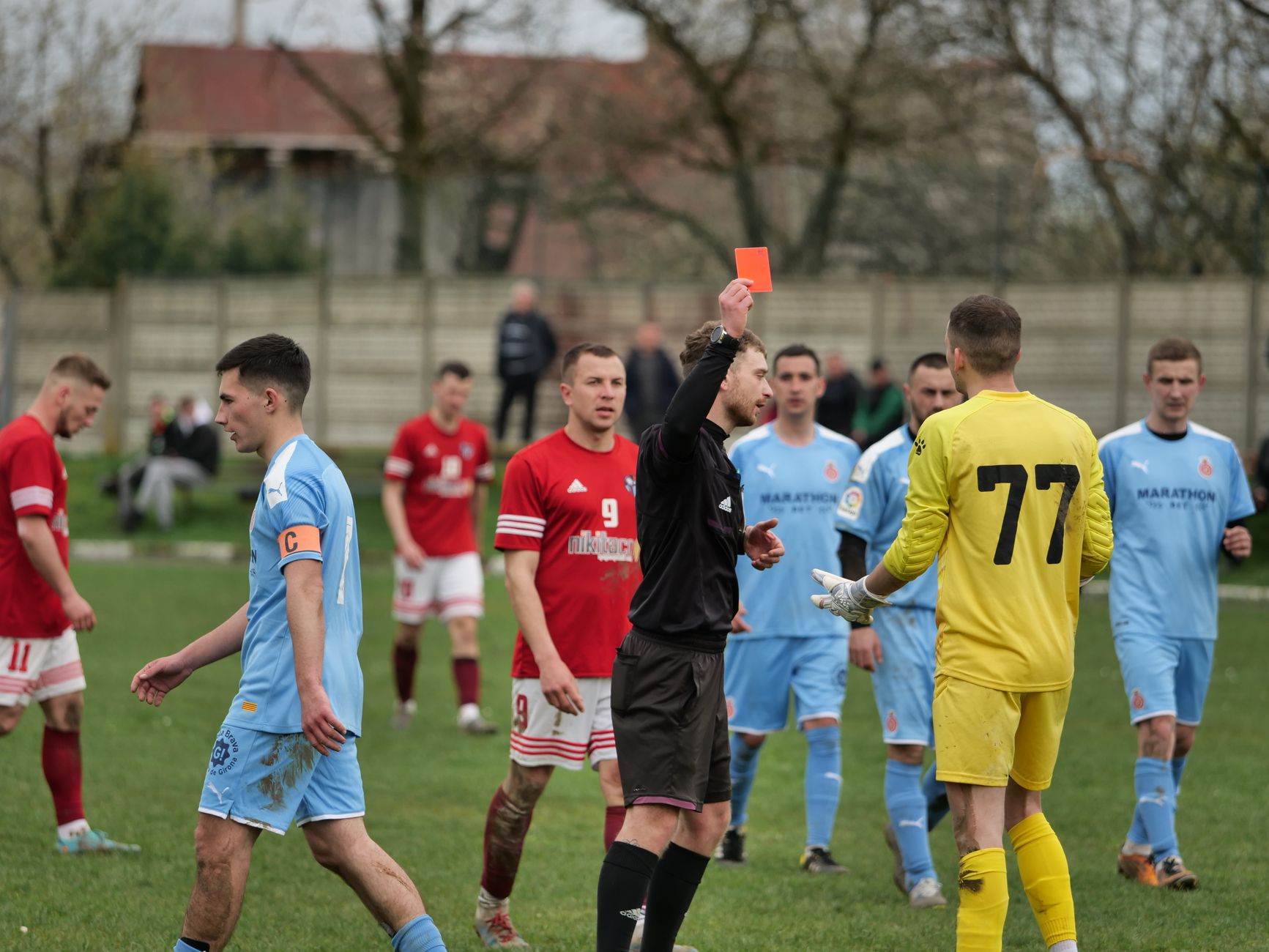
Photo by Володимир Король on Pexels
Is VAR really designed to eliminate referee mistakes?
VAR is designed to correct clear and obvious errors or serious missed incidents, not to remove every subjective disagreement from football. The system supports the referee in four review categories: goals, penalties, direct red cards, and mistaken identity. It improves decision accuracy, but it does not make football decisions entirely objective.
The governing framework comes from the IFAB Video Assistant Referee protocol, which states that “the final decision is always taken by the referee.” That sentence matters. A VAR official can recommend a review, but cannot independently overturn the referee’s call. The on-field referee must first make a decision, even when the incident is difficult to judge in real time.
A typical review involves several officials:
- The referee makes the original call.
- The VAR checks the incident automatically.
- The assistant VAR and replay operators search relevant angles.
- The VAR recommends either no intervention, a factual correction, or an on-field review.
- The referee communicates the final decision.
The system therefore has a narrow purpose. It is not a second referee who manages every foul. It is an escalation process for incidents capable of changing the match. According to FIFA’s VAR information, implementation also requires competition approval, trained officials, suitable technology, and written authorization. That is why VAR use can differ between the Premier League, UEFA Champions League, Major League Soccer, and national competitions.
For readers following predictions at Goal Moments, this distinction is essential. A team can dominate possession and still lose a penalty review. A goal can look valid for 20 seconds and then be disallowed for an offside position several phases earlier. VAR measures decision eligibility, not momentum or team quality.
Want a clearer match-analysis framework before placing a wager?
How does VAR handle an offside goal?
VAR handles an offside goal by checking the attacking player’s position at the exact moment a teammate plays or touches the ball, then assessing whether that position affected the play. Offside is usually a factual review, so the referee may receive a direct recommendation without watching the monitor. The goal is awarded or cancelled according to the verified frame and applicable Law 11.
Offside reviews combine video footage with calibrated line technology. Operators identify the relevant kick point, select the last defender and the attacker’s legally relevant body part, then generate lines or a three-dimensional model where available. Hands and arms are excluded from offside calculations because they cannot legally score a goal. The shoulder, head, torso, legs, and feet may matter.
The process is harder than television graphics suggest. The ball may deform during contact. Camera angles may be imperfect. A frame shown to viewers is not always the only frame assessed by the VAR team. In tight situations, the technology can establish the player’s position, while the referee still judges whether an interfering player affected an opponent or gained an advantage.
A goal sequence may be reviewed for more than offside. VAR can examine:
- An attacking handball before the goal.
- A foul during the buildup.
- The ball leaving the field.
- A goalkeeper infringement during a preceding penalty.
- A mistaken identity issue connected to disciplinary action.
One operational detail is often missed: VAR does not necessarily review only the final pass. The reviewable attacking phase can extend back to the beginning of the possession that directly produced the goal, subject to competition protocol. This explains why a goal may be cancelled after several passes, even when the final shot itself appears clean.
The Laws of the Game also separate factual position from subjective interference. That separation reduces unnecessary monitor checks. If technology proves a player was offside, the referee normally receives the factual correction. If the question is whether a player blocked an opponent’s line of vision, an on-field review may be more appropriate.
[Internal Link: football offside rules explained]
What about penalties, red cards, and mistaken identity?
VAR reviews penalties, direct red cards, and mistaken identity only when the incident meets the clear-and-obvious-error or serious-missed-incident threshold. It does not normally review ordinary yellow cards, routine fouls, or every disputed corner. The referee may use information from the VAR or inspect the replay personally through an on-field review.
Penalty checks are especially complex because contact does not automatically equal an offence. VAR assesses location, challenge timing, hand position, intensity, and whether the defender made a legitimate attempt to play the ball. A referee might initially award a penalty, receive evidence that the contact occurred outside the box, and reverse the decision to a free kick. The reverse can also happen when an apparent penalty is shown to involve a fair tackle.
Direct red-card reviews focus on serious foul play, violent conduct, spitting, biting, and offensive, insulting, or abusive actions. A clearly incorrect second yellow card is generally outside the standard direct-red review category. However, mistaken identity can be corrected when the referee cautions or dismisses the wrong player.
Consider this practical sequence:
- A defender commits a tackle.
- The referee gives a yellow card.
- VAR identifies excessive force and recommends an on-field review.
- The referee watches normal-speed and slow-motion footage.
- The referee changes the card to direct red, or confirms yellow.
- Play restarts with the correct disciplinary record.
Slow motion can exaggerate apparent force, so normal-speed footage remains valuable for judging intensity and match context. This is one reason a review does not automatically produce the harshest possible outcome. VAR supplies evidence; the referee applies the Laws of the Game.
For bettors, a penalty review can alter several markets at once: match result, correct score, next goal, player goalscorer, total goals, and cards. Never treat an early settlement display as final during a review. Different sportsbooks may suspend markets, void markets, or wait for confirmation under their own rules.
See how decisions affect match statistics and tournament forecasts.
Where does VAR fail?
VAR fails when footage cannot establish a fact clearly, when the Laws require subjective judgment, or when a review is legally unavailable after play has restarted. It can improve evidence without creating certainty. Delays, camera limitations, communication problems, and inconsistent interpretations can still affect the match experience.
The most important limitation is timing. Under the IFAB protocol, there is no fixed maximum duration for a review because accuracy takes priority over speed. Yet a restart can close the review window in many circumstances. After play restarts, the referee generally cannot review an earlier incident, except for mistaken identity or specific serious-offence cases such as violent conduct, spitting, biting, or abusive actions.
Other weaknesses include:
- A blocked camera angle may prevent a reliable conclusion.
- A calibrated line can show position but not always deliberate action.
- Audio communication is usually not fully available to viewers.
- Slow motion may distort the perceived speed of a challenge.
- The protocol cannot correct every missed foul.
- Different leagues may use different camera coverage and technology.
A less obvious problem affects data analysis. Public match timelines often record the final outcome but not the original decision, review duration, or exact review category. That makes simple “VAR changed the game” claims unreliable. A penalty awarded after review is not equivalent to a penalty confirmed after a check. Analysts should record the original call, intervention type, restart, and minute separately.
This creates a useful evidence rule for Goal Moments: count VAR interventions, not merely controversial clips. A match with six reviews may have only one overturned decision. Conversely, a single review in the 88th minute can have more competitive impact than five routine checks earlier.
[Internal Link: how football betting markets react to VAR]
Should you try VAR analysis today?
You should use VAR analysis as a risk-control tool, not as a standalone betting strategy. It can explain disallowed goals, penalty uncertainty, and card decisions, but it cannot reliably predict when an intervention will happen. The strongest approach is to combine referee tendencies, team tactics, penalty-area entries, defensive style, and confirmed lineups.
A disciplined workflow looks like this:
- Check whether the competition uses fully approved VAR.
- Identify referee and assistant-referee profiles.
- Review each team’s offside line, pressing intensity, and box entries.
- Separate confirmed penalties from pending reviews.
- Wait for the restart before treating the result as official.
- Recalculate live odds after a reversal.
- Track the net position, not just individual winning bets.
That final step is where many bettors lose control. Suppose a goal is disallowed and a live market temporarily shows an incorrect price. The opportunity is not automatically profitable. You must include stake exposure, commission, cash-out restrictions, void rules, and the possibility that the market suspends before execution. A dramatic VAR moment is information, but emotion is not an edge.
Goal Moments covers FIFA World Cup 2026 predictions, tactics, player statistics, and tournament developments. Use that context to assess why an incident matters, then verify the official decision through the competition feed or sportsbook settlement rules. Never chase a price simply because a referee has gone to the monitor.
Want practical tournament analysis built around confirmed match information?
VAR is most useful when you understand its boundaries. It checks goals, penalties, direct red cards, and mistaken identity, but the referee retains the final decision. Offside technology can settle player position, while subjective fouls still require human judgment. Reviews may be lengthy, and many incidents become unavailable after a restart. For safer football analysis, log the original call, VAR outcome, restart, market movement, and total net result rather than reacting to one viral clip.
Frequently Asked Questions
Q: What is VAR in football?
A: VAR means Video Assistant Referee, a match official who checks selected incidents using video footage. The system is authorized for goal or no goal, penalty or no penalty, direct red cards, and mistaken identity under the IFAB protocol. VAR does not replace the referee, and the referee keeps the final decision. It is intended to correct a clear and obvious error or a serious missed incident, not to review every foul or disputed challenge.
Q: How does VAR work step by step?
A: VAR automatically checks relevant incidents, investigates the footage, and recommends action when the threshold for intervention is met. The referee may accept factual information, such as an offside position, or conduct an on-field review using the pitch-side monitor. After considering the evidence, the referee confirms, changes, or cancels the original decision. Players and coaches cannot demand a review, and surrounding the referee during the process is prohibited.
Q: What is the difference between VAR and an on-field review?
A: VAR is the remote video-checking role, while an on-field review is the referee’s personal inspection of replay footage. Factual matters, especially offside position, may be corrected from the VAR room without a monitor visit. Subjective decisions, such as the severity of a tackle or whether contact merits a penalty, commonly require the referee to view the incident. Both procedures end with the referee’s decision.
Q: Why does VAR sometimes fail to overturn an obvious-looking decision?
A: VAR cannot overturn a decision unless the footage demonstrates a clear and obvious error or serious missed incident. Broadcast angles may be blocked, contact may remain subjective, and slow motion can change how force appears. The referee may therefore confirm the original call even when viewers disagree. A decision can also become unreviewable after play restarts, subject to limited protocol exceptions.
Q: How long does a VAR review take?
A: A VAR review has no universal maximum time limit under the IFAB protocol, although officials aim to avoid unnecessary delays. A simple factual offside check may take seconds, while a penalty or red-card review can take considerably longer. The duration depends on camera availability, the incident’s complexity, and communication between the VAR team and referee. Betting markets may remain suspended until the decision and restart are confirmed.
Q: Does VAR make football betting safer?
A: VAR can reduce uncertainty about official decisions, but it does not make football betting safe or automatically profitable. A review can change match result, goals, cards, and player markets simultaneously, while sportsbook void and settlement rules vary. Check the competition, market terms, and confirmed restart before acting. Track stake, liability, commission, and net position rather than chasing sudden odds movement.
Q: Can VAR review an incident after play restarts?
A: VAR generally cannot review an earlier incident after play has restarted, with exceptions for mistaken identity and certain serious offences. The protocol specifically preserves limited review possibilities for violent conduct, spitting, biting, and extremely offensive, insulting, or abusive actions. This timing rule prevents unlimited interruptions and protects the structure of the match. Always confirm the competition’s applicable VAR regulations because implementation details can differ.
[Internal Link: FIFA World Cup 2026 predictions and team tactics]
For continued VAR explanations, player statistics, and FIFA World Cup 2026 coverage, follow Goal Moments and review every major decision with evidence before taking action.
Goal Moments � Editorial Archive � Volume IV